Jul 8, 2011

Coco de Mer

This is a postcard from Praslin island! On the top right picture you cen see the unique Coco de Mer!

The Coco de Mer (Lodoicea maldivica), the sole member of the genus Lodoicea, is a palm endemic to the islands of Praslin and Curieuse in the Seychelles. It formerly also was found on St Pierre, Chauve-Souris and Ile Ronde (Round Island, an islet near Praslin) in the Seychelles group, but has become extinct on these islands. The name of the genus, Lodoicea, is derived from Lodoicus, the Latinised form of Louis, in honour of King Louis XV of France.
Formerly the Coco de Mer was known as Maldive Coconut. Its scientific name, Lodoicea maldivica, originated before the 18th century when the Seychelles were uninhabited. In centuries past the coconuts that fell from the trees and ended up in the sea would be carried away eastwards by the prevailing sea currents. The nuts can only float after the germination process, when they are hollow. In this way many drifted to the Maldives where they were gathered from the beaches and valued as an important trade and medicinal item.
Legend has it that sailors, who first saw the unique double coconut floating in the sea, imagined that it resembled a woman's disembodied buttocks. This association is reflected in one of the plant's archaic botanical names, Lodoicea callipyge Comm. ex J. St.-Hil., in which callipyge is from Greek words meaning 'beautiful rump'. Other botanical names used in the past include Lodoicea sechellarum Labill. and Lodoicea sonneratii (Giseke) Baill.
Until the true source of the nut was discovered in 1768, it was believed by many to grow on a mythical tree at the bottom of the sea. European nobles in the sixteenth century would often have the shells of these nuts polished and decorated with valuable jewels as collectibles for their private galleries. The Coco de Mer tree is now a rare and protected species. [wikipedia]

Seeing it from up close, I can tell you that the fruit does look like a woman's reproductive organ [!!!].

Seychelles postcards

For our honeymoon we went to the amazing Seychelles! Seychelles are 115 little, exotic islands in Indian Ocean. As you can imagine, I bought as many postcards as I could!! Some of the unique experiences we had there, were to feed giant tortoises, learn how to open and drink coconuts and tastes creole cuisine!!

Anse Aux Pins, Mahe island
Giant tortoise
Seychelles (officially the Republic of Seychelles (French: République des Seychelles; Creole: Repiblik Sesel), is an island country spanning an archipelago of 115 islands in the Indian Ocean, some 1,500 kilometres (932 mi) east of mainland Africa, northeast of the island of Madagascar. It is part of the Mascarene Islands along with Mauritius and Réunion.

I' m back!!

The last couple of months I didn't have time to dedicate to my favorite blog...I was preparing my wedding!! Now, that I am finally a happily married woman, who has just returned from an amazing honeymoon, I will continue blogging! So, I will start immediately uploading my latest postcards!! :)

May 1, 2011

The oldest town in Germany


This postacrd was sent by Chris, my postcard pal. It shows Trier, the oldest town in Germany!!


Trier (French: Trèves, Luxembourgish: Tréier; Latin: Augusta Treverorum; the Latin adjective associated with Trier is Treverensis) is a city in Germany on the banks of the Moselle River. It is the oldest city in Germany, founded in or before 16 BCE.
Trier lies in a valley between low vine-covered hills of ruddy sandstone in the west of the state of Rhineland-Palatinate, near the German border with Luxembourg and within the important Mosel wine-growing region.
Trier is the oldest seat of a Christian bishop north of the Alps. In the Middle Ages, the Archbishop of Trier was an important ecclesiastical prince, as the Archbishopric of Trier controlled land from the French border to the Rhine. He was also one of the seven electors of the Holy Roman Empire.

Volendam, 'Filled dam'

This multiview postcard was sent by Rob from the Netherlands via postcrossing [NL-604955]. It shows Volendam a small town in North Holland.

Volendam is a town in North Holland in the Netherlands, in the municipality of Edam-Volendam. The town has about 22,000 inhabitants (November 2007).
Originally, Volendam was the location of the harbor of the nearby Edam, which was situated at the mouth of the river IJ. In 1357, the inhabitants of Edam dug a shorter canal to the Zuiderzee with its own separate harbor. This removed the need for the original harbor, which was then dammed and used for land reclamation. Farmers and local fishermen settled there, forming the new community of Vollendam, which literally meant something like 'Filled dam'. In the early part of the 20th century it became something of an artists' retreat, with both Picasso and Renoir spending time here. The majority of the population belongs to the Roman Catholic Church, which is deeply connected to the village culture. Historically, many missionaries and bishops grew up in Volendam. Today there is the chapel of Our Lady of the Water of the controversial 'visionary' Mrs Hille Kok, which is located in a village park.

Apr 16, 2011

Pont du Gard


This postcard was sent by Nancy from France via postcrossing [FR-141027]. It shows Le pont du Gard, an aquaduc built by the Romans 2000 years ago! As she writes, she loves going there to enjoy the sun!


The Pont du Gard is a notable ancient Roman aqueduct bridge that crosses the Gard River in southern France. It is part of a 50 km (31 mi) long aqueduct that runs between Uzès and Nîmes in the South of France. It is located in Vers-Pont-du-Gard near Remoulins, in the Gard département. The aqueduct was constructed by the Romans in the 1st century AD and was added to UNESCO's list of World Heritage Sites in 1985. It is the highest of all Roman aqueduct bridges and is the best preserved after the Aqueduct of Segovia.

Sights of Washington


This multi view postcard was sent by Jamie from Wahington D.C. via postcrossing [US-1079058]. It shows the most famous sites of the city! She writes to me: "I live just outside of Washington D.C. It is a place with a lot of history." On the card we can see [at first row from left] Lincoln Memorial, White House, Iwo Jima Memorial. On the second row we can see the 3 Soldiers Vietnam War Statue, Jefferson Memorial, WWII Memorial, Washington Monument. On the third row, White House, Korean War Memorial, the Kennedy Center, the Capitol Building. And in the last row we can see the Capitol Building, Lincoln Memorial and Vietnam Women's Statue.

I have written before about Washington and some of its sights, so I will write now a few words about some of them.

Apr 9, 2011

White Nights in Tallinn | Estonia


This beautiful card of Tallinn was sent by Ella via postcrossing [EE-98433]. She lives there with her family. She tells me that on the card we can see the old town of Tallinn, which is an Unesco World Heritage Site,  in White Nights. "In June we have White Nights. It is not dark in night: on the card you can see the darkest time (you can read newspaper without extra light)."
 Sounds like an incredible experience! I hope I will see it for myself someday :)

Apr 8, 2011

Cherry blossom near Oberkrumbach


This card shows Cherry blossom near Oberkrumbach, Germany, and it was sent by Angela via postcrossing [DE-877556].

A cherry blossom is the flower of the cherry trees known as sakura (桜 or 櫻; さくら?). In English, "sakura" refers to the Japanese flowering cherry, Prunus serrulata. Cherry fruit (桜んぼ sakuranbo) comes from another species of tree. Cherry blossoms are indigenous to many East Asian states including Japan, Korea, and China. Japan has a wide variety of cherry blossoms (sakura): well over 200 cultivars can be found there.

Apr 4, 2011

Amish


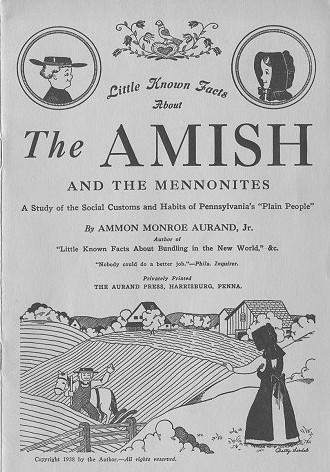
This beautiful postcard was sent by Beth from Pennsylvania via postcrossing [US-1061432]. As she writes, there are a lot of Amish people in that area and "they use horse and buggy instead of cars". I must admit that I know very little about Amish people, but I think that they are misunderstood.


The Amish (Pennsylvania Dutch: Amisch, German: Amische), sometimes referred to as Amish Mennonites, are a group of Christian church fellowships that form a subgroup of the Mennonite churches. The Amish are known for simple living, plain dress and reluctance to adopt many conveniences of modern technology.
The history of the Amish church began with a schism in Switzerland within a group of Swiss and Alsatian Anabaptists in 1693 led by Jakob Ammann. Those who followed Ammann became known as Amish. These followers were originally from three main places: the German-speaking parts of Switzerland, Alsace (now part of France), and the Palatinate of Germany. In the early 18th century, many Amish and Mennonites immigrated to Pennsylvania for a variety of reasons. Today, the most traditional descendants of the Amish continue to speak Pennsylvania German, also known as Pennsylvania Dutch. However, a dialect of Swiss German predominates in some Old Order Amish communities, especially in the American state of Indiana. As of 2000, over 165,000 Old Order Amish live in Canada and the United States. A 2008 study suggested their numbers have increased to 227,000, and in 2010 a new study suggested their population had grown by 10% in the past two years to 249,000, with increasing movement to the West.