Apr 16, 2011

Pont du Gard


This postcard was sent by Nancy from France via postcrossing [FR-141027]. It shows Le pont du Gard, an aquaduc built by the Romans 2000 years ago! As she writes, she loves going there to enjoy the sun!


The Pont du Gard is a notable ancient Roman aqueduct bridge that crosses the Gard River in southern France. It is part of a 50 km (31 mi) long aqueduct that runs between Uzès and Nîmes in the South of France. It is located in Vers-Pont-du-Gard near Remoulins, in the Gard département. The aqueduct was constructed by the Romans in the 1st century AD and was added to UNESCO's list of World Heritage Sites in 1985. It is the highest of all Roman aqueduct bridges and is the best preserved after the Aqueduct of Segovia.

Sights of Washington


This multi view postcard was sent by Jamie from Wahington D.C. via postcrossing [US-1079058]. It shows the most famous sites of the city! She writes to me: "I live just outside of Washington D.C. It is a place with a lot of history." On the card we can see [at first row from left] Lincoln Memorial, White House, Iwo Jima Memorial. On the second row we can see the 3 Soldiers Vietnam War Statue, Jefferson Memorial, WWII Memorial, Washington Monument. On the third row, White House, Korean War Memorial, the Kennedy Center, the Capitol Building. And in the last row we can see the Capitol Building, Lincoln Memorial and Vietnam Women's Statue.

I have written before about Washington and some of its sights, so I will write now a few words about some of them.

Apr 9, 2011

White Nights in Tallinn | Estonia


This beautiful card of Tallinn was sent by Ella via postcrossing [EE-98433]. She lives there with her family. She tells me that on the card we can see the old town of Tallinn, which is an Unesco World Heritage Site,  in White Nights. "In June we have White Nights. It is not dark in night: on the card you can see the darkest time (you can read newspaper without extra light)."
 Sounds like an incredible experience! I hope I will see it for myself someday :)

Apr 8, 2011

Cherry blossom near Oberkrumbach


This card shows Cherry blossom near Oberkrumbach, Germany, and it was sent by Angela via postcrossing [DE-877556].

A cherry blossom is the flower of the cherry trees known as sakura (桜 or 櫻; さくら?). In English, "sakura" refers to the Japanese flowering cherry, Prunus serrulata. Cherry fruit (桜んぼ sakuranbo) comes from another species of tree. Cherry blossoms are indigenous to many East Asian states including Japan, Korea, and China. Japan has a wide variety of cherry blossoms (sakura): well over 200 cultivars can be found there.

Apr 4, 2011

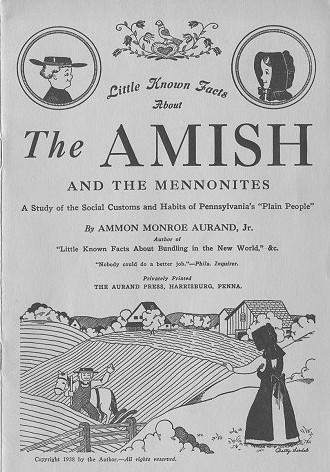
Amish


This beautiful postcard was sent by Beth from Pennsylvania via postcrossing [US-1061432]. As she writes, there are a lot of Amish people in that area and "they use horse and buggy instead of cars". I must admit that I know very little about Amish people, but I think that they are misunderstood.


The Amish (Pennsylvania Dutch: Amisch, German: Amische), sometimes referred to as Amish Mennonites, are a group of Christian church fellowships that form a subgroup of the Mennonite churches. The Amish are known for simple living, plain dress and reluctance to adopt many conveniences of modern technology.
The history of the Amish church began with a schism in Switzerland within a group of Swiss and Alsatian Anabaptists in 1693 led by Jakob Ammann. Those who followed Ammann became known as Amish. These followers were originally from three main places: the German-speaking parts of Switzerland, Alsace (now part of France), and the Palatinate of Germany. In the early 18th century, many Amish and Mennonites immigrated to Pennsylvania for a variety of reasons. Today, the most traditional descendants of the Amish continue to speak Pennsylvania German, also known as Pennsylvania Dutch. However, a dialect of Swiss German predominates in some Old Order Amish communities, especially in the American state of Indiana. As of 2000, over 165,000 Old Order Amish live in Canada and the United States. A 2008 study suggested their numbers have increased to 227,000, and in 2010 a new study suggested their population had grown by 10% in the past two years to 249,000, with increasing movement to the West.

Mar 27, 2011

Schloss Nymphenburg


These three postcards show Schloss Nymphenburg in Germany. I have bought them many years ago!

Picture: Nymphenburg palace complex, aerial photograph

 Nymphenburg Palace owes its foundation as a summer residence to the birth of the long-awaited heir to the throne, Max Emanuel, who was born in 1662 to the Bavarian Elector Ferdinand Maria and his wife, Henriette Adelaide of Savoy, after some ten years of marriage.

Mar 26, 2011

Düsseldorf


This postcard from Düsseldorf was sent by another of my postcard pals, Chris. She writes: "Düsseldorf is the state capital of North Rhine - Westphalia. Düsseldorf has a beautiful old town. On the card you can see the Ko, a boulevard with a canal running in the middle of it. It has many luxury stores of well-known brands. It's too expensive, but it's nice to walk along the street and just to do some window-shopping."
Well,  it sure looks amazing on the card and the description of Chris makes it even more appealing. Hope I'll do window - shopping at Ko boulevard someday, too!!

Peking Opera II


Another postcard from Peking Opera, this time sent by my postcard pal Valerie! She sent this one as she was on her way to Vancouver and had a transfer in Beijing. The card shows "the stage of Peking Opera, an expressive demonstration of reproducing largeness through triviality".

For more information about Peking Opera see this post.

Mar 21, 2011

Belorusskiy Railway Station | Russia


This beautiful vintage postcard was sent by Valerie, my postcard-pal. It shows Belorusskiy Railway Station in Moscow.

Belorussky Rail Terminal (Russian: Белорусский вокзал) is one of nine rail terminals in Moscow. It was opened in 1870 and rebuilt in its current form in 1910-12. Construction of the railway from Moscow to Smolensk, and then to Minsk and Warsaw, started in the second half of the 1860s. Construction of the station, known as Smolensky, began in late April 1869. A grand opening of the Moscow-Smolensk railway took place on 19 September 1870, the station became the sixth in Moscow. In November 1871 after the extension of the railway to Belarus, the station was renamed Belorussky Station. On the 15 May 1910 the right wing of the new station opened, and in 26 February 1912 and the left wing opened. The station was designed by architect Ivan Strukov. On the 4 May 1912 the railway was renamed the Alexander Railway, the station was renamed Alexander Station. In August 1922 the Alexander and the Moscow-Baltic railways were merged into the Moscow-Belarus-Baltic, so the station was renamed Belorussian-Baltic station. In May 1936 and, after yet another reorganization of the railways, the station received its present name - Belorussky Station. [wikipedia]

Mar 17, 2011

Peking Opera

This beautiful postcard was sent by ShengSheng from China as a private swap! It is from "Peking Opera" and the dynasty on the card is "The Three Kingdoms".

Known as China's national opera, Peking Opera, which originated in the late 18th century, is a synthesis of music, dance, art and acrobatics. It is the most influential and representative of all operas in China. Based upon traditional Anhui Opera, it has also adopted repertoire, music and performing techniques from Kun Opera and Qingqiang Opera, as well as traditional folk tunes in its development, eventually forming its own highly stylized music and performing techniques.
Peking Opera can be divided into "civil" pieces, which are characterized by singing, and "martial" ones, which feature acrobatics and stunts. Some operas are combination of both.